
Why Systems Build Brands (And Logos Don’t)
More Than a Logo
You’ve likely been there before: you spend weeks obsessing over a tiny icon. You pick the perfect shade of ocean blue and a font that feels just right. Finally, your new logo is ready. You put it on your website, print it on a business card, and wait for the magic to happen. But then... nothing changes.
The truth is, a logo is just a handshake. It’s a polite "hello," but it doesn’t tell your story, solve a problem, or build a relationship. If you want to move from being just another business in New Zealand or Australia to becoming a household name, you need to stop thinking about logos and start thinking about brand systems. AtWild Sea Creative, we believe that while a logo is a piece of the puzzle, the system is the picture on the box that shows you how everything fits together.
Key Takeaways
A logo is a symbol, but a brand system is the entire experience.
Consistency across all platforms builds trust and authority (EEAT).
Systems save time and money by providing a clear roadmap for marketing.
High-value clients look for professional systems, not just pretty icons.
Holistic branding helps you stand out in a crowded market like NZ and Australia.
The Big Mistake: Logo vs. Brand Identity
Many business owners think a logo and a brand are the same thing. They aren't. A logo is a graphic mark. A brand is the "gut feeling" a person has about your business. When you focus only on the visual mark, you’re essentially buying a fancy door for a house that hasn’t been built yet.
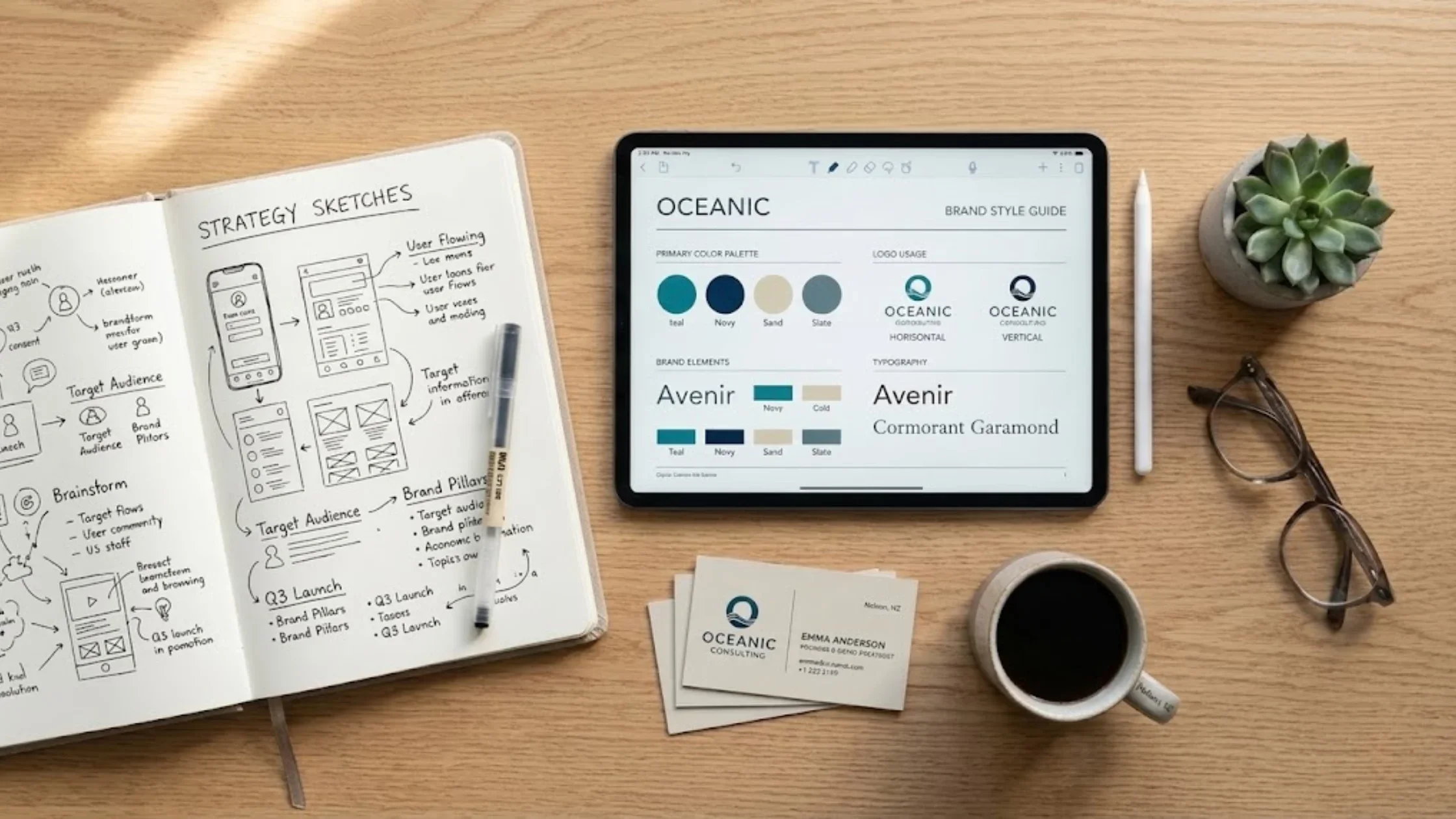
Avisual identity system is the entire world your brand lives in. It includes your colours, your tone of voice, the way your photos look, and how you treat your customers. When these things work together, they create a system. A system is reliable. It’s consistent. It’s what makes someone recognize a brand like Apple or Air New Zealand without even seeing their logo.
Why Systems Win Every Time
Think about your favourite local cafe. You don’t go there just because the logo on the cup is pretty. You go because the music is right, the staff speak to you in a certain way, and the website was easy to use when you checked the menu. This isholistic branding in action.
When you invest in a system rather than just a design, you are building trust. In the world of Google EEAT (Experience, Expertise, Authoritativeness, and Trustworthiness), consistency is the fastest way to prove you are a pro. If your Instagram looks modern but your invoices look like they are from 1995, you break that trust. A system ensures that every single "touchpoint"—every time a customer interacts with you—feels the same.
The Problem with "Logo-Only" Thinking
If you only have a logo, you run into "The Frankenstein Effect." This is when you try to make an ad, then a social media post, then a flyer, but they all look different because you don't have a plan. You end up wasting time and money trying to reinvent the wheel every single day.
High-value clients in Nelson, Auckland, or Sydney aren't looking for a pretty picture; they are looking for a professional partner. They want to know that you have your act together. Abrand strategy vs design approach shows them that you understand their goals. It moves the conversation from "Do you like this colour?" to "Will this system help us grow?"
Creating a Desire for Consistency
Imagine never having to guess what font to use again. Imagine having a set ofbrand guidelines that tell you exactly how to show up on video, how to write your emails, and what kind of photos to take. This is the freedom a system gives you. It saves you hours of stress and makes your business look ten times bigger than it might actually be.
When your brand is a system, it becomes an asset. It works for you while you sleep. It tells your customers in New Zealand and Australia that you are an expert who cares about the details. This is how you attract clients who are happy to pay more because they can see the value and theexpertise you bring to the table.
Moving Beyond the Surface
To truly stand out, you have to look at the "why" behind the "what." Why do you do what you do? How do you want people to feel? A logo can't answer those questions, but a brand system can. It’s about creating a language that your customers understand.
If you are tired of feeling like your marketing is a mess of different styles, it’s time to stop looking for a logo designer and start looking for a brand partner. You need someone who looks at the big picture and builds a foundation that can support your dreams for years to come.
Ready to Build a System That Works?
Your business deserves more than just a nice icon. It deserves a voice, a personality, and a system that helps it grow. If you're ready to stop playing small and start building a brand that lasts, we are here to help.
At Wild Sea Creative, we don't just "do logos." We createcomplete digital marketing identities that help you connect with your ideal audience and turn followers into fans. Let’s move beyond the logo and build something real together.
Contact Nish at Wild Sea Creative today to start your brand journey.
Frequently Asked Question (FAQs)
-
A logo is a single graphic or mark used to identify a company, while a brand system is a comprehensive framework that includes logos, typography, colour palettes, imagery styles, and messaging. Think of the logo as the "face" and the brand system as the entire "personality" and "wardrobe." A system ensures that every time a customer sees your business—whether on a website, an ad, or an invoice—the experience feels consistent and professional. This consistency builds deep trust and helps your business grow much faster than a logo alone ever could.
-
Logos fail when they lack a supporting system because they cannot communicate a complex story or value proposition in isolation. A brand is built through repeated, consistent experiences across many different touchpoints. If your logo is modern but your customer service is outdated, the brand breaks. A system aligns your visuals with your strategy, ensuring that your message is clear and your reputation is protected. Without a system, a logo is just a decoration rather than a functional business tool that drives sales and loyalty.
-
Brand guidelines are a set of rules that explain how your brand system should be used. They cover everything from where to place your logo to what words you should use in your emails. You need them because they keep your brand looking professional no matter who is working on it. Whether you are hiring a new staff member or working with a social media manager, guidelines ensure your brand stays consistent. This saves you from making "branding mistakes" that confuse your customers and make your business look disorganized or untrustworthy.
-
High-value clients look for stability, professionalism, and attention to detail. A complete brand system signals that you are an established expert who invests in their own business quality. It moves you away from being a "commodity" (where people shop based on the lowest price) to being a "premium choice" (where people shop based on trust and value). When your visual identity is cohesive across all platforms, it proves your "Authoritativeness" and "Trustworthiness," making it much easier for premium clients in New Zealand and Australia to say "yes" to your services.
-
Holistic branding is an approach that looks at the entire business as a single, connected entity. It’s not just about a logo or a website; it’s about how the brand sounds, feels, acts, and looks at every single stage of the customer journey. This includes your social media presence, your internal culture, your packaging, and your digital marketing. By taking a holistic view, you ensure there are no gaps in your brand experience, creating a much stronger and more memorable impression on your target audience than traditional, fragmented marketing ever could.
-
Yes, a logo is still important as a "memory trigger," but its role has changed. In today's digital world, a logo is often seen in very small sizes, like a social media profile picture or a website favicon. Because of this, the logo needs to be simple, while the brand system around it does the heavy lifting. The logo starts the conversation, but the system finishes it. Investing in a logo without a system is like buying a car engine without the wheels—it’s a powerful part, but it won’t get you where you want to go.
-
Brand strategy is the "brain" and visual design is the "body." Strategy involves researching your audience, defining your unique value, and figuring out how to beat your competitors. Visual design is taking those invisible ideas and making them visible through colours and shapes. If you have design without strategy, you have "pretty" marketing that doesn't sell. If you have strategy without design, you have great ideas that no one notices. A brand system perfectly blends both so your business looks great and performs even better.
-
One of the most common mistakes is "DIY-ing" different parts of the brand at different times, leading to a "patchwork" look. Another mistake is choosing designs based on personal preference rather than what appeals to the target customer. Many small businesses also forget to update their GBP (Google Business Profile) or website to match their new look, which hurts their local SEO and credibility. A brand system prevents these errors by providing a unified plan that works for the business goals rather than just the owner's favourite colours.
-
Absolutely. A brand system improves your Click-Through Rate (CTR) because a professional, consistent look is more eye-catching and trustworthy. When your ads look like your website, and your website looks like your emails, customers feel more comfortable moving through your sales funnel. This reduces "friction" and leads to higher conversion rates. In the world of SEO, a strong brand system helps you build "Authoritativeness," which is a key factor Google uses to decide who gets to the top of the search results.
-
Developing a full brand system usually takes between 4 to 8 weeks, depending on the complexity of the business. Unlike a "quick logo" which can be done in days, a system requires deep research, strategy sessions, and the creation of multiple visual assets. This time is an investment in the next 5 to 10 years of your business. By doing the work correctly at the start, you avoid the need for expensive rebrands later on and create a solid foundation that can grow as your business expands.
