
Why Traffic Means Nothing If Your Website Doesn’t Convert

The Ghost Town Effect
Imagine spending your entire marketing budget to hire a massive billboard on the busiest motorway in Auckland or Sydney. Thousands of cars stream past every hour. Your brand name is everywhere. But when you check your inbox or your phone, there is total silence. No enquiries, no bookings, no new clients.
This is what we call the "Ghost Town Effect." In the world of digital marketing, many service-based businesses fall into the trap of chasing high traffic numbers. They celebrate when their Google Analytics shows a spike in visitors, but they forget one cold, hard truth: you cannot pay your team or grow your business with "clicks."
If your website is getting hits but no one is hitting the "Contact Us" button, you don’t have a traffic problem; you have a conversion problem. It is time to stop worrying about how many people are looking at your site and start focusing on how many of them are actually choosing to work with you.
Key Takeaways
Traffic is just the start: Getting people to your site is only half the battle.
Quality over quantity: One hundred ready-to-buy visitors are better than ten thousand random clicks.
Trust is the currency: Service businesses rely on E-E-A-T (Experience, Expertise, Authoritativeness, and Trustworthiness).
CRO is the fix: Conversion Rate Optimisation (CRO) turns passive readers into active leads.
First impressions matter: Your website design must guide the user, not confuse them.
Website Traffic vs Conversions: The Great Misconception
Many business owners believe that if they just get more people to see their website, sales will naturally follow. This is the "Website Traffic vs Conversions" debate. While traffic is the fuel, your website is the engine. If the engine is broken, it doesn't matter how much fuel you pour in; you aren't going anywhere.
For service-oriented businesses—like consultants, creative agencies, or tradespeople—a conversion isn't usually a quick "Add to Cart" click. It is a high-value action, such as filling out a detailed enquiry form or scheduling a discovery call. When your traffic is high but conversions are low, it usually means there is a "mismatch" between what the user expected to find and what you actually showed them.
Understanding the Basics of Conversion Rate Optimisation (CRO)
Conversion Rate Optimisation, or CRO, is the scientific process of making your website better at persuading people to take action. It isn't about magic tricks; it is about understanding human behavior. For a service business, CRO focuses on removing the "friction" that stops a potential client from reaching out.
Maybe your contact form has too many boxes to fill in. Perhaps your "My Services" page doesn't clearly explain how you solve the customer's specific pain points. CRO looks at these small hurdles and flattens them. By improving your Lead Generation Strategy, you ensure that the journey from being a stranger to becoming a client is as smooth as possible.
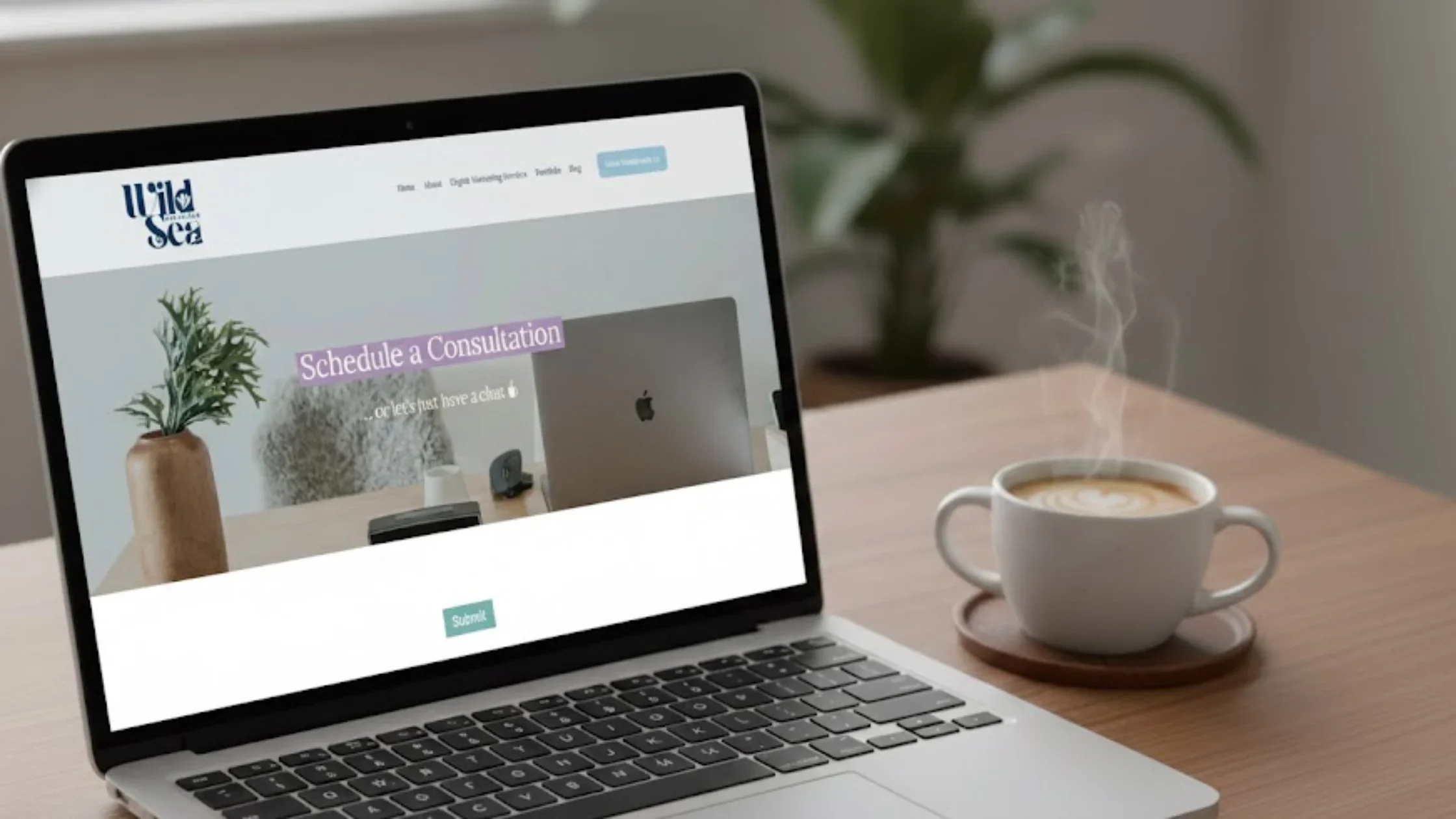
Why Quality Website Traffic Matters More Than Ever
Not all traffic is created equal. You could rank number one on Google for a very broad term, but if those visitors are looking for free information rather than a professional service, they will leave as quickly as they arrived. This is why Quality Website Traffic is the gold standard.
We want to attract people who are specifically looking for the expertise you offer. When you align your content with the needs of your audience in New Zealand and Australia, you build immediate relevance. If a visitor feels like you are speaking directly to their problems, they are far more likely to trust you.
The Role of User Experience (UX) Design
Have you ever visited a website and felt lost? Maybe the menu was confusing, or the text was too hard to read on your phone. This is a failure of User Experience (UX) Design. In the service industry, your website acts as your digital storefront. If the door is stuck and the lights are off, people will walk away.
Good UX design is about more than just looking "pretty." It is about layout, speed, and clarity. A well-designed site guides the visitor’s eyes toward your most important information. It uses clear buttons and simple language to tell them exactly what to do next. When a site feels easy to use, it builds a sense of professional authority.
Building Trust Through Google’s E-E-A-T
In today's digital world, people are cautious. They want to know they are dealing with a real expert before they hand over their hard-earned money. This is where Google’s E-E-A-T guidelines come in.
When you learn about Nish and the heart behind Wild Sea Creative, you see the human element that builds this vital trust.
How to Turn Your Website into a Lead-Generating Machine
If you are tired of seeing visitors leave without saying hello, it is time to take action. You need a website that doesn't just sit there looking nice but actively works to grow your business. This involves auditing your current pages and asking: "Is it easy for a customer to hire me right now?"
At Wild Sea Creative, we specialise in bridging the gap between being "seen" and being "hired." We don't just build websites; we create digital experiences that resonate with your audience and turn casual browsers into loyal clients. Whether you need a brand refresh or a total overhaul of your digital presence, our detailed digital marketing services are designed to put your business back on the map—for all the right reasons.
Stop settling for "ghost town" traffic. Let’s make your website the most hardworking member of your team.
Frequently Asked Question (FAQs)
-
This usually happens because of a "conversion gap." Your visitors might find your content helpful, but your website might not be doing enough to convince them to take the next step. Common reasons include a lack of clear "Call to Action" buttons, a confusing layout, or a message that doesn't clearly explain the benefits of your service. To fix this, you need to focus on Conversion Rate Optimisation (CRO) to make the journey from visitor to lead much simpler.
-
While every industry is different, a good conversion rate for service businesses typically ranges between 2% and 5%. However, top-performing sites can see rates of 10% or higher. Instead of comparing yourself to others, focus on improving your own baseline. If you can move your conversion rate from 1% to 2%, you have effectively doubled your leads without spending an extra cent on advertising.
-
Yes, absolutely. Google monitors how users interact with your site. If people arrive and immediately "bounce" (leave) because the site is slow or hard to use, Google perceives your site as less valuable and may lower your rankings. Good UX design keeps people on the page longer, which signals to search engines that your content is high-quality and relevant.
-
Traffic refers to the total number of people who visit your website. A lead is a specific person who has shown interest in your service by providing their contact information or reaching out directly. Traffic is a vanity metric; leads are a business metric. You want a Lead Generation Strategy that focuses on attracting the "right" kind of traffic that is likely to convert.
-
You can build trust by showcasing your E-E-A-T. This includes adding real client testimonials, displaying professional certifications, having a clear "About" page, and ensuring your site has an SSL certificate (the little padlock in the browser bar). People want to see the faces behind the business, so humanising your brand is a great way to improve trust.
-
The biggest mistakes include having too many distractions on a page, using "broken" links, having a slow-loading website, and asking for too much information on a contact form. Another major mistake is not having a clear, bold "Call to Action" (CTA) that tells the user exactly what to do next, such as "Book a Consultation" or "Get a Quote."
-
High-quality traffic stays on your site for more than a few seconds, visits multiple pages, and interacts with your content. If you check your analytics and see that people are staying on your "Services" page for several minutes, that is a sign of quality. If they leave within five seconds, they likely aren't your target audience.
-
They work best as a team. SEO brings people to the front door, and CRO invites them inside to stay. If you have great SEO but poor CRO, you are wasting traffic. If you have great CRO but no SEO, no one will ever see your amazing website. You need both to build a successful online presence.
-
Unlike SEO, which can take months to show results, CRO changes can sometimes show an impact almost immediately. Once you fix a broken form or clarify a confusing headline, you might see an uptick in enquiries within days. It is an ongoing process of testing and refining your site to see what your audience prefers.
-
While you can make small changes yourself, a professional agency like Wild Sea Creative understands the psychology behind user behavior. We look at the "big picture"—from your brand voice to your technical UX design—to ensure every element of your site is working toward a single goal: growing your business.
