
Top 5 SEO Tools Every NZ Small Business Should Use in 2026
Too Many Tools, Not Enough Clarity
Here's the honest bit first: most small businesses in New Zealand don't fail at SEO because they lack tools. They fail because they have too many of the wrong ones, half-set-up, gathering dust in a bookmarks folder.
You've probably tried a plugin, watched a YouTube tutorial, or paid for a tool someone recommended on a Facebook group. Then the free trial ended, the dashboard looked overwhelming, and you went back to hoping Google would notice you. That's not a personal failing — it's what happens when a tool arrives without a plan attached.
In 2026, the SEO tools NZ small businesses get the most value from are Google Search Console (free), Ahrefs (from roughly NZ$50–$220 a month), Google Analytics 4 (free), Screaming Frog (free up to 500 pages, then a small annual licence), and Surfer SEO (from roughly NZ$100 a month). Start with the two free ones. Add a paid tool only once you know what question you're trying to answer.
Key Takeaways
Start with Google Search Console and Google Analytics 4 — both free, and both essential
Ahrefs is the strongest paid pick for understanding competitors, from roughly NZ$50 a month
Screaming Frog's free tier (up to 500 URLs) covers most small-business websites
Surfer SEO helps you write content that ranks without keyword stuffing
Tools show you data — a clear strategy is what turns that data into leads
Pricing across all paid tools shifts often in 2026; always check the provider's own page
The Five SEO Tools NZ Businesses Actually Use in 2026
This article walks through the five SEO tools we rely on most often when working with New Zealand and Australian small businesses, what each one actually does in plain terms, what it costs right now, and where it falls short. You'll also see which single tool we reach for first with a new client, and why, plus ten quick answers to the questions Kiwi business owners search most.
None of this is a ranked "best of" list dressed up as objectivity. It's a working toolkit, tested on real NZ websites, updated for how search — including Google's AI Overviews and answer-style results — actually behaves in 2026. If you're building out your wider software stack alongside it, our 2026 Marketing Toolkit for NZ brands covers what sits either side of SEO, from email to social scheduling.
What Makes a Good SEO Tool in 2026?
Search has changed shape. Google now blends traditional blue links with AI-generated summaries, and more Kiwis are asking questions directly into AI chat tools before they ever open a search engine. A tool that only tracks keyword rankings misses half the picture.
A genuinely useful SEO tool in 2026 does three things well. It gives you a clear next step rather than a wall of numbers. It saves you time instead of creating another task on your list. And for a New Zealand business, it needs to understand local search behaviour — Google Business Profile data, regional keyword intent, and the reality that "plumber Nelson" and "plumber Auckland" are two completely different competitive fields.
If you'd like the fuller picture of what search engine optimisation actually involves in New Zealand right now, our guide on what SEO in New Zealand actually includes in 2026 is a useful companion read to this one. With that in mind, here are the five tools worth your time this year.
What's the Best Free SEO Tool for a Small NZ Business in 2026?
Google Search Console remains the best free SEO tool for small NZ businesses in 2026, since it shows exactly how Google sees your site at no cost. Its main limitation is that it only reports what's already happening — it won't tell you what your competitors are doing or suggest new keyword opportunities.
1. Google Search Console — The Non-Negotiable Starting Point
If you only ever install one tool from this list, make it this one.
Google Search Console is free, and it shows you precisely how Google reads your website. You'll see which search terms bring people to your site, which pages get the most clicks, and where technical issues are quietly holding you back. For a New Zealand business, this is often the fastest way to understand which regional search terms are already sending you traffic without you realising.
What makes it worth revisiting in 2026 is how closely it now ties into AI-driven search behaviour. You're not just watching a ranking position move up or down anymore — you're seeing patterns in how people find you, including through voice search and AI Overview citations. For more on what's actually driving those movements, see our breakdown of how Google really ranks New Zealand websites in 2026.
At Wild Sea Creative, every SEO project starts with a Search Console audit. It's the foundation of our SEO services for Nelson and NZ-wide businesses, and it lines up directly with the technical checklist in our guide on what makes a website SEO-ready in New Zealand. If your website isn't connected to it yet, that's step one — today, not next month.
2. Ahrefs — Competitor Research Without the Guesswork
When a business owner asks us which paid tool is genuinely worth the spend, Ahrefs usually comes up first.
Ahrefs is built for understanding what your competitors are doing and where the gaps are. You can see which keywords a rival ranks for, where their backlinks come from, and which of their pages pull in the most traffic. As of 2026, Ahrefs runs six pricing tiers, starting with a limited free plan and a one-off Starter option from around US$29, moving through paid monthly plans that broadly sit between roughly US$129 and US$449, with custom Enterprise pricing above that. Converted to New Zealand dollars, that's roughly NZ$50 to NZ$220 a month for most small-business use cases — though exchange rates and Ahrefs' own pricing shift often enough that it's worth checking their official pricing page before you commit.
For a New Zealand small business competing against bigger, better-funded brands, this kind of insight changes the game. Instead of guessing at content ideas, you can see what's already ranking well and build something more useful.
We use Ahrefs to shape blog strategy, strengthen service pages, and support the long-term content planning behind our own Wild Sea Creative blog. Its backlink data is also worth reading alongside our piece on why old-style link building is dead and what NZ Google search wants instead — the tool is only as useful as the strategy behind how you act on what it finds. Done properly, it often replaces two or three smaller tools and saves real hours each month — the limitation is that it takes a bit of a learning curve before the data turns into decisions.
3. Google Analytics 4 — Turning Visits Into Insight
Getting people to your website is only half the job. Understanding what they do once they land is the other half — and it's the half most small businesses skip.
Google Analytics 4 (GA4) tracks how visitors actually behave on your site: which pages hold their attention, where they drop off, and which pages lead to an enquiry or sale. It remains free and, in 2026, continues to lean further into privacy-first, cookie-light measurement, which matters both for compliance and for customer trust.
At Wild Sea Creative, GA4 is how we connect SEO effort to real business outcomes — not just traffic, but leads and sales. It feeds directly into decisions about site structure, content updates, and conversion improvements across our wider digital marketing services. Doing SEO without watching this data is a bit like advertising in the dark and hoping someone walks in. GA4 tells you whether the lights are actually on.
4. Screaming Frog — Technical SEO Made Approachable
Technical SEO sounds intimidating, but it doesn't need to be.
Screaming Frog crawls your website the same way a search engine does. It flags broken links, missing page titles, duplicate content, slow pages, and indexing problems — the unglamorous issues that quietly cap how well a site can rank. The free version crawls up to 500 URLs, which comfortably covers most small-business websites. Beyond that, a single-user licence currently runs at roughly £199 a year (close to NZ$430), which is genuinely modest for what it uncovers.
For older New Zealand business websites, or ones built without an SEO specialist involved, this tool tends to surface quick, high-impact fixes. We use it during audits and before any redesign or platform migration, exactly as outlined in our own website audit checklist for 2026. It's especially handy for Squarespace-built sites, where a few of the common SEO myths holding NZ businesses back turn out to be genuine, fixable issues once you crawl the site properly. You don't need to run it constantly — a check every three months is usually enough to catch problems before they cost you rankings.
5. Surfer SEO — Content That's Built to Rank, Not Just Read
Content is still central to ranking well in 2026, but only when it's written with intent.
Surfer SEO analyses the pages already ranking for your target keyword and gives clear, specific guidance on structure, word count, and terms to include — without pushing you into robotic keyword stuffing. Pricing has moved around a fair bit this year, but current entry-level plans sit at roughly US$59–$99 a month, with mid-tier plans around US$119–$219, scaling up to enterprise pricing for agencies. As with Ahrefs, it's worth a quick check of Surfer's own pricing page, since tiers have shifted more than once in 2026 alone.
What we appreciate most is that it still supports genuinely human, people-first writing. Rather than cramming in keywords, it nudges you toward covering a topic properly — which happens to be exactly what both Google's ranking systems and AI Overview citations reward. This pairs naturally with the search-intent approach we take across NZ client content. For a business publishing regularly, it removes a lot of the second-guessing.
Which Tool We Actually Use First for NZ Clients (and Why)
If a new client asks us to pick just one paid tool to start with, we almost always say Ahrefs — but only after Search Console and GA4 are already wired up properly.
Here's why. On a recent technical audit for an NZ service-based client (details anonymised at their request), a Search Console check alone showed three high-traffic pages losing visibility, but not why. Running the same domain through Ahrefs' Site Audit surfaced the actual cause: a batch of internal links pointing to redirected URLs, quietly diluting the pages' authority. That's the kind of fix that's invisible until you're looking at the right data — and it took under fifteen minutes to spot once the right tool was in front of it.
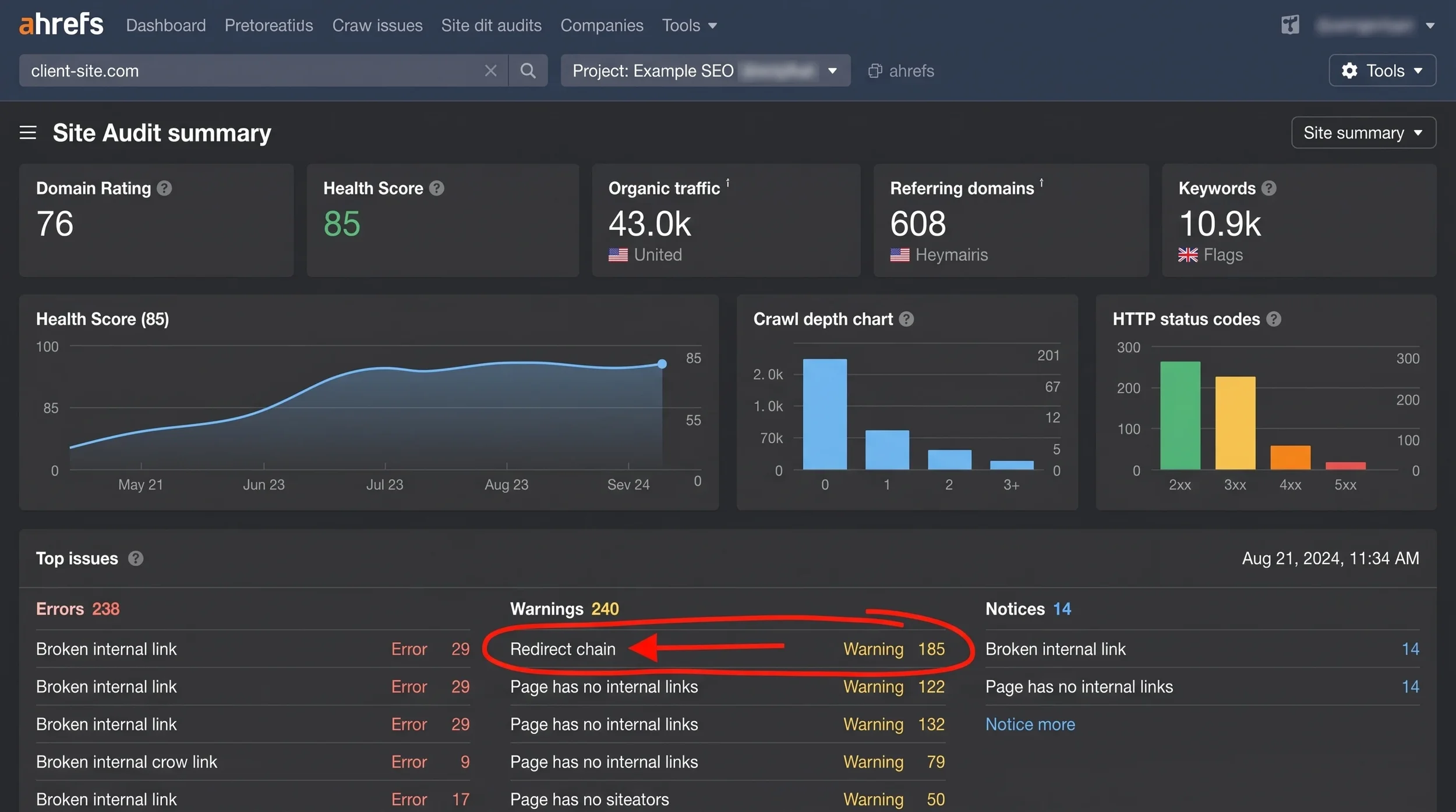
The pattern holds across most of our client work: free tools tell you that something's wrong, and Ahrefs tends to tell you why. That's the gap it closes for us more consistently than any other paid tool on this list.
Key Benefits at a Glance

Prices are approximate as of 2026 and change reasonably often — always check each provider's own pricing page before budgeting. For a wider breakdown of what NZ businesses typically spend on SEO overall, beyond just software, see our guide to SEO costs in New Zealand.
How These Tools Work Better With a Real Strategy
None of these tools replace a strategy. They support one.
The most common mistake we see is a business collecting data without a plan for using it. Dashboards fill up, subscriptions renew quietly, and nothing actually improves. That's usually where working with an established SEO agency in New Zealand makes the real difference — not because the tools are complicated, but because knowing which number matters this month takes experience.
At Wild Sea Creative, we use these five tools to support clear, specific goals: better visibility for the right search terms, stronger leads, and growth you can actually measure. Whether that's refining a service page, building out a content library, or lifting local rankings across the regions your business serves, the tools work — but only when someone's steering them. If local visibility specifically is your main goal, our complete guide to local SEO in New Zealand is worth reading alongside this one.
Ready to Stop Guessing With Your SEO?
If growing your online visibility matters to you in 2026, the shift from guesswork to a proper system starts now.
Set up the two free tools today — Google Search Console and GA4 take under twenty minutes between them. If you'd rather skip the trial-and-error and get results faster, that's exactly what our team does every day for NZ and Australian small businesses.
👉 Get in touch with Wild Sea Creative and we'll build an SEO system around your actual numbers, not someone else's template.
Choosing the Right SEO Tools for Your NZ Business
SEO tools won't fix a website on their own, but the right five, used consistently, take the guesswork out of growing your search visibility. Start free, add a paid tool once you know what question you need answered, and don't be afraid to bring in help once the dashboards start piling up faster than the results. Once your SEO stack is sorted, our guide on how AI tools can level up your marketing in 2026 is a natural next stop.
Frequently Asked Question (FAQs)
-
Google Search Console and Google Analytics 4 cover the essentials for free, while Ahrefs, Screaming Frog, and Surfer SEO add competitor research, technical audits, and content guidance. Most NZ small businesses only need two or three of these running well, not all five at once.
-
At minimum, connect Google Search Console and GA4 — both free and both non-negotiable. Beyond that, Screaming Frog's free crawl catches technical issues, and a paid tool like Ahrefs helps once you're ready to compete more seriously on keywords and backlinks.
-
Most global SEO tools work fine for NZ sites since they crawl and analyse any website regardless of country. What matters more is local expertise applying them — an NZ-based SEO agency will know regional search patterns and Google Business Profile quirks that generic software won't flag on its own.
-
Screaming Frog remains the go-to for technical crawls, while Ahrefs' Site Audit tool covers broader on-page and backlink health. Google Search Console rounds this out by showing exactly how Google itself is indexing and ranking your pages right now.
-
Ahrefs and Google Search Console see the most consistent day-to-day use among NZ marketers, largely because they cover competitor insight and first-party Google data respectively. Surfer SEO is increasingly popular for content teams publishing on a regular schedule.
-
Ahrefs' Keywords Explorer lets you filter search volume specifically for New Zealand, which is essential since global keyword data often overstates demand for a market this size. Google Search Console also shows the exact terms already bringing NZ visitors to your site.
-
Start with the two free options — Search Console and GA4 — before spending anything. From there, Screaming Frog's free tier and a lower Ahrefs plan give strong value without a large monthly commitment, especially for a single-location NZ business.
-
Yes — Google Search Console and Google Analytics 4 are both entirely free and give NZ businesses everything needed to understand search performance and on-site behaviour. Screaming Frog also offers a free crawl of up to 500 URLs, which suits most small business websites.
-
Screaming Frog focuses purely on technical crawling and is the most thorough for that job. Ahrefs blends technical auditing with competitor and backlink data in one dashboard, making it a stronger all-rounder if you only want to manage one paid subscription.
-
Ahrefs remains the most widely used for competitor analysis in NZ, showing rival keyword rankings, backlink sources, and top-performing pages. Google Search Console can't analyse competitors directly, but it does confirm which of your own pages are already competing well.
